RSLRA Turbo Relocation April 2008
by Subachad on Feb.07, 2010, under Automotive
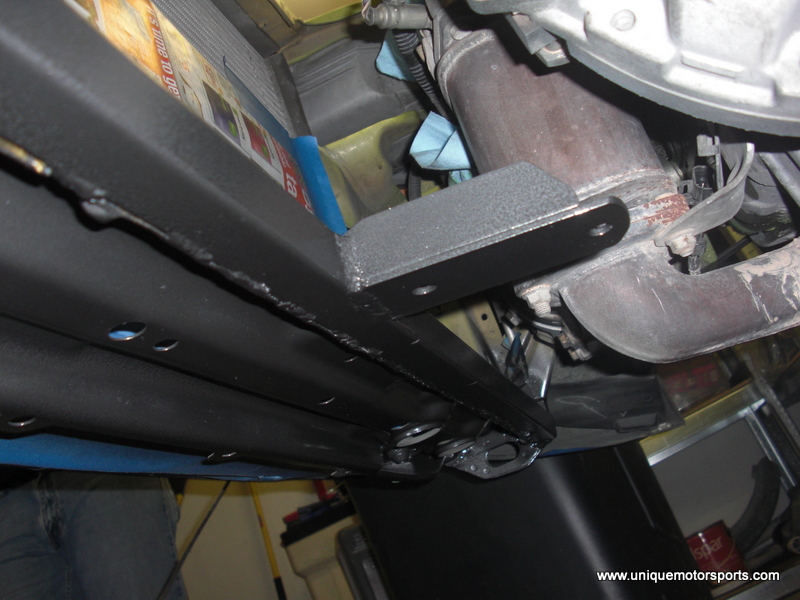
Finally a chance to build something using melted steel. Not sure what it is about basic fabrication work, but it’s almost always a good time. Add to that, I haven’t actually made anything in a while so it’s nice to keep the skills fresh.
The project started by loading up my welder, 4.5” angle grinder, electric die grinder, wire brush, gloves, welding helmet, porting bits and a few other misc fabrication tools into the Skittle and headed off to James for some work on his Beastly rear wheel drive Impreza.
Fuel Pump Sizing
by Subachad on Feb.07, 2010, under Automotive Tech
Total Fuel Flow (lb/hr) = Injector Size (lb/hr) X number of injectors
To convert lb/hr to gallons-per-hour divide by 6.25.
To convert from pounds-per-hour to liters-per-hour divide by 1.64.
To convert from gallons-per-hour to liters-per-hour, multiply by 3.8.
OK, now that this is out of the way lets figure out what I need for my 200 hp 1.8L.
The injector size we figured on is 29.4 pounds/hr
Total Fuel Flow (lb/hr) = 29.4 X 4
Total Fuel Flow (lb/hr) = 117.6
Now we have to convert it to Liters-per-hour since that’s what most pumps are measured by.
117.6 * 1.64 = 192.86
So the fuel pump needed will only need to flow about 193 LPH.
Legacy GT Steel Braided Brake Lines – January 2010
by Subachad on Feb.05, 2010, under Automotive
Some pictures of a Brake line install for a Legacy GT.
Calculating Top Speed
by Subachad on Feb.03, 2010, under Automotive Tech
Wondering how much power it will take to get your car up to 200 MPH? Here’s an equation to help you find out. (this information is from August 2001 Sport Compact Car)
Aero Horsepower: Drag x Speed or HP at the wheels
Frontal Area: Amount of Frontal Area (large hood scoops, mirrors and bumper openings add to this and decrease your top speed.
Cd: Coefficient Drag.
Speed: In MPH
Aero Horsepower (wheel horsepower) = 0.000007 x Frontal Area x Cd x Speed3
Compression vs Boost by Mattc VIA iClub
by Subachad on Feb.01, 2010, under Automotive Tech
Higher static compression creates more power throughout the rpm band, but it’ll lower your maximum allowed boost before the onset of detonation. Boost is worth way more power than compression, because boost raises your compression and your total air flow at the same time. With the down side of, when you’re not on the boost, you have slightly less power.
Effective Compression Ratio = static compression ratio x (1 + boost/14.7)^1/2
For a car running 8.5:1 pistons and 18psi(~max on pump gas)
8.5 x (1 + 18/14.7)^1/2 = 12.67 ECR
If you run 9.0:1 pistons and want to maintain the same 12.67 ECR (~max on pump gas), you’ll have to lower your boost to: 14.4psi